

A visa refusal or unexpected delay can feel overwhelming, especially after months of preparation, documentation, and financial planning. Many applicants are left confused about what went wrong and whether their immigration goals are still possible.
Canadian immigration decisions are based on detailed legal assessments, and even small inconsistencies can lead to refusals or prolonged processing times.
A Calgary Immigration Lawyer helps break down the refusal reasons, review GCMS notes, and identify the most effective legal path forward. In this blog, we’ll explore common refusal grounds, causes of delays, available remedies like reapplication or judicial review, and how strategic legal guidance can help you recover with confidence.
Why Immigration Applications Get Refused in Canada?
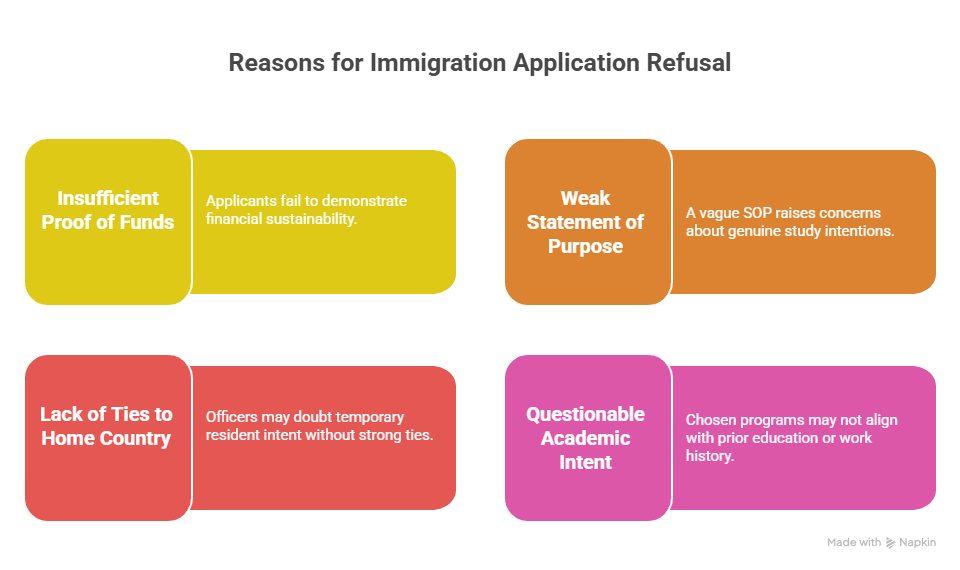
Immigration refusals are rarely random. Officers assess eligibility, documentation accuracy, financial stability, credibility, and intent under strict legislative guidelines. Understanding how IRCC evaluates applications helps you identify weaknesses before reapplying. Common Reasons for Study Permit Refusal:
Study permit refusals often relate to financial capacity, intent to study, or doubts about whether the applicant will leave Canada after studies.
- Insufficient Proof of Funds
Applicants fail to clearly demonstrate tuition payment ability, living expenses coverage, and stable financial history, leading officers to question financial sustainability. - Weak Statement of Purpose (SOP)
A vague or generic SOP that lacks academic clarity, career alignment, or logical progression can raise concerns about genuine study intentions. - Lack of Ties to Home Country
If applicants cannot show strong family, employment, property, or financial ties back home, officers may doubt their temporary resident intent. - Questionable Academic Intent
When chosen programs do not align with prior education or work history, officers may suspect immigration motives outweigh educational goals.
Immigration Delays in Calgary – When to Be Concerned
Processing delays can be frustrating, especially when you have travel plans, job offers, or academic deadlines approaching. While some waiting time is normal, not all delays are routine. Understanding the difference between standard processing and unreasonable delay helps you decide when to seek Canada visa delay help from a legal professional.
Below are the most common causes and warning signs:
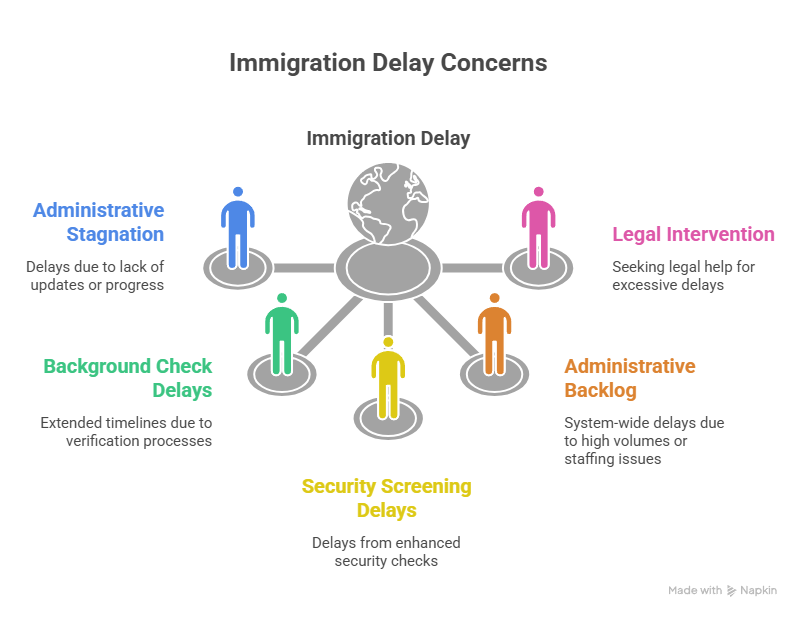
- Standard Processing vs. Unreasonable Delay
Every application has estimated timelines published by IRCC. If your file exceeds normal processing without updates, it may signal administrative stagnation. - Background Checks
Background verification includes employment validation, travel history review, and cross-referencing security databases, which can extend timelines unpredictably. - Security Screening
Certain applications undergo enhanced security checks involving multiple agencies, especially if travel history or documentation requires additional verification. - Administrative Backlog
High application volumes, staffing shortages, or policy changes often create system-wide delays unrelated to individual eligibility. - How Long Is “Too Long”
When your application significantly exceeds posted IRCC processing times without explanation, it may indicate an unreasonable procedural delay. - When Legal Intervention Becomes Necessary
If delays become excessive, a lawyer may submit formal inquiries or consider mandamus action in Federal Court to prompt decision-making.
What a Calgary Immigration Lawyer Does After a Refusal
A refusal is not the end of your immigration journey, but it does require a structured and strategic response. Many applicants make the mistake of reapplying immediately without understanding why the application failed. A Calgary Immigration Lawyer approaches refusals differently by first identifying the legal reasoning behind the decision and then building a targeted recovery plan. Each step matters, because repeating the same weaknesses can lead to another rejection.
Step 1 – Obtain GCMS Notes
The first step is requesting GCMS notes, which are the internal case notes written by the immigration officer. These notes reveal far more detail than the refusal letter itself.
GCMS notes typically disclose:
- The officer’s detailed reasoning
- Specific credibility concerns
- Risk indicators flagged during assessment
- Financial doubts or documentation gaps
- Internal eligibility scoring remarks
While refusal letters often contain general wording, GCMS notes expose the precise weaknesses in the file. A Calgary Immigration Lawyer carefully reviews these notes to understand what truly influenced the officer’s decision, rather than relying on assumptions.
Step 2 – Analyze Officer Concerns
Once the internal reasoning is clear, the next step is identifying and correcting the underlying concerns. Immigration officers primarily evaluate credibility, financial capacity, and documentation consistency.
Credibility
Officers assess whether your story is logical and consistent across forms, statements, and supporting evidence. Even small contradictions can raise doubts.
Financial Proof
Applications must clearly demonstrate stable and legitimate financial support. Unexplained deposits, inconsistent income records, or weak sponsorship documents often trigger refusal.
Documentation Strength
Missing employment letters, unclear academic transcripts, or incomplete records weaken the application. Officers look for complete, verifiable, and well-structured documentation.
A Calgary Immigration Lawyer evaluates whether the refusal was due to genuine eligibility concerns or errors in interpretation. This distinction is critical before deciding your next move.
Step 3 – Choose the Right Strategy
After identifying the root cause, the most important decision is selecting the appropriate legal remedy. This is where strategy matters most.
Reapply
If the refusal resulted from fixable weaknesses, such as stronger financial evidence or improved documentation, a carefully rebuilt application may be the best solution.
Reconsideration Request
If the officer overlooked evidence or made a clear factual mistake, a formal reconsideration request may correct the decision without court action.
Appeal
Some immigration categories allow appeals to the Immigration Appeal Division, particularly certain family sponsorship cases.
Judicial Review in Federal Court
Judicial review is not a new application. It challenges whether the officer’s decision was legally reasonable. The Federal Court does not reassess eligibility but determines whether the refusal followed proper legal standards.
This is where many competitors provide incomplete explanations. An appeal involves re-examining the merits of the case before a tribunal, while judicial review focuses strictly on whether the decision-making process was legally fair and reasonable. The two remedies are very different in scope, procedure, cost, and timelines.
A knowledgeable Calgary Immigration Lawyer helps determine which path offers the strongest probability of success, based on legal grounds rather than guesswork. Acting strategically after a refusal can mean the difference between a repeated rejection and a successful outcome.
Procedural Fairness Letters – Why Immediate Legal Action Matters?
A procedural fairness letter Canada is a serious warning from IRCC. It means the officer has identified major concerns in your application and is giving you one final chance to respond before refusal.
What Is It?
This letter is issued when credibility, documentation, or eligibility issues arise. It signals that your file is at high risk of rejection.
Why It’s Serious
At this stage, the officer is questioning your honesty or compliance. A weak response almost always leads to refusal.
Timeline to Respond
Deadlines are strict, often between 7 to 30 days. Missing them can result in automatic refusal.
Risk of Misrepresentation
If IRCC concludes information was false or misleading, you could face refusal and a five-year ban from Canada.
How a Calgary Immigration Lawyer Helps
A Calgary Immigration Lawyer carefully analyzes the concern, gathers supporting evidence, and drafts a legally structured response that directly addresses the officer’s doubts. A strategic reply can prevent refusal and protect your future immigration prospects.
Avoiding Repeat Refusals – Risk Mitigation Strategy
Reapplying without fixing the real weaknesses almost guarantees another refusal. IRCC compares past and new applications carefully. A Calgary Immigration Lawyer focuses on eliminating risk areas before resubmission. Here are five key strategies:
- Strengthen Financial Documentation
Provide clear income history, explain large deposits, and show stable, traceable sources of funds that demonstrate genuine financial capacity. - Restructure the SOP Strategically
Align your study or career plans logically with past education and work experience while directly addressing prior refusal concerns. - Validate Employer Documentation
Ensure job letters include accurate duties, salary details, and verifiable company information to avoid credibility doubts. - Use Evidence Layering
Support every key claim with multiple documents, such as pay slips, tax records, and contracts, to reinforce consistency. - Address the Previous Refusal Transparently
Acknowledge past refusal reasons clearly and explain how each concern has been fully resolved with stronger documentation.
A structured approach significantly reduces the risk of facing the same outcome again.
Lawyer vs Immigration Consultant
Lawyer vs Immigration Consultant – Why Legal Representation Matters in Complex Cases
When facing a refusal, procedural fairness letter, or potential inadmissibility issue, many applicants wonder whether they need a lawyer or an immigration consultant. While both can assist with applications, the level of authority and legal protection differs significantly. In complex cases, especially those involving appeals or court action, the distinction becomes critical.
Here’s a clear comparison:
| Factor | Calgary Immigration Lawyer | Immigration Consultant |
| Federal Court Representation | Can represent clients in Federal Court for judicial review proceedings. | Cannot represent clients in Federal Court. Must refer to a lawyer. |
| Handling Judicial Review | Fully authorized to file and argue judicial review cases. | Not authorized to conduct court litigation. |
| Legal Privilege | Protected by solicitor-client privilege, ensuring strict confidentiality of communications. | Limited confidentiality protections under regulatory framework. |
| Complex Inadmissibility Cases | Trained to handle misrepresentation, criminal inadmissibility, and serious legal issues. | Typically limited to standard application processes. |
| Procedural Fairness & Litigation Strategy | Can build legal arguments grounded in case law and immigration legislation. | Focused mainly on application preparation and submission. |
In straightforward cases, either professional may assist. However, when dealing with refusals, misrepresentation allegations, or Federal Court challenges, legal authority matters. A Calgary Immigration Lawyer offers court representation, legal privilege, and advanced strategy that becomes essential in high-risk immigration matters.
Final Thoughts
Immigration refusals and unexpected delays can feel overwhelming, especially when your future plans depend on approval. The good news is that most setbacks can be addressed with the right legal strategy, careful documentation, and a clear understanding of how IRCC evaluates applications. From GCMS analysis to judicial review, every step must be calculated and evidence-driven.
Working with an experienced Calgary Immigration Lawyer ensures your case is handled strategically, not emotionally. If you are facing a refusal, procedural fairness letter, or prolonged delay, professional guidance can make a decisive difference. For trusted legal support and a structured path forward, connect with OB Law Office and take the next step with confidence.