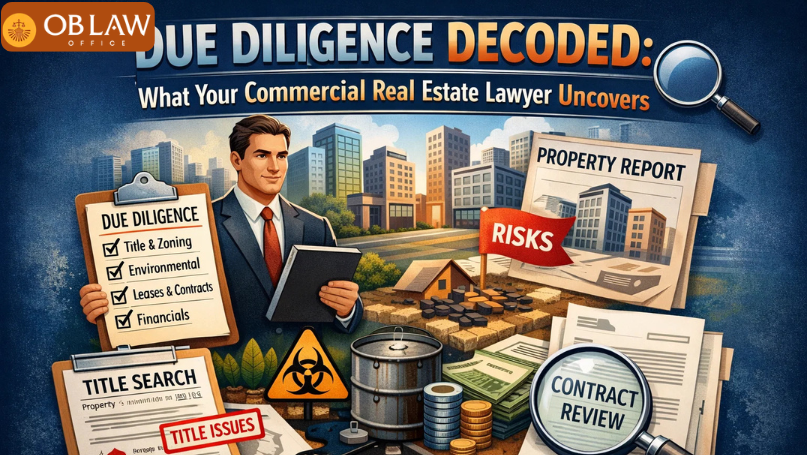
Buying commercial property is not like buying a house. The numbers are bigger. The contracts are more layered. The risks hide in places most investors never think to look. That’s exactly where a Commercial Real Estate Lawyer steps in.
Before any commercial deal closes, there’s a period called due diligence. This is the investigation phase. It’s where documents are reviewed, risks are uncovered, and unpleasant surprises are brought to light before they become expensive problems.
If you’re purchasing an office building, retail plaza, warehouse, or mixed-use property, due diligence is not optional. It’s the line between a smart investment and a legal nightmare.
This guide breaks down what really happens behind the scenes and what your lawyer is actually uncovering before you sign on the dotted line.
Commercial Real Estate Lawyer and the Due Diligence Process Explained
So what exactly does a Commercial Real Estate Lawyer do during due diligence?
It goes far beyond reading a contract. Your lawyer acts as a legal investigator, risk assessor, negotiator, and strategic advisor all at once. The goal is simple: protect your financial interests and reduce liability.
Here’s what due diligence typically involves:
- Reviewing the purchase and sale agreement
- Conducting a full title search
- Examining zoning and land use compliance
- Analyzing lease agreements and tenant rights
- Identifying liens, easements, or encumbrances
- Reviewing environmental assessments
- Checking regulatory and building compliance
Every commercial property carries legal history. That history matters. Even a small oversight can affect financing, resale value, or operational plans.
A seasoned commercial property lawyer knows where risks usually hide and how to address them before closing.
Commercial Real Estate Lawyer Checklist: What Gets Reviewed Before Closing
Let’s go step by step through what your lawyer is actually reviewing during commercial real estate due diligence.
1. Title Search and Ownership Verification
First, your lawyer confirms that the seller legally owns the property and has the right to sell it.
This includes checking for:
- Outstanding mortgages
- Construction liens
- Tax arrears
- Easements
- Boundary disputes
If a title defect exists and it isn’t resolved, you could inherit someone else’s legal or financial problem. That’s not a situation any investor wants.
2. Zoning and Land Use Compliance
Zoning rules determine what you’re legally allowed to do with the property.
For example:
- Can you operate retail in that building?
- Is expansion permitted?
- Are there parking restrictions?
- Does signage require special approval?
Your commercial real estate lawyer verifies that your intended use aligns with municipal zoning regulations. If it doesn’t, your business model could collapse before it even begins.
3. Existing Lease Agreements and Rent Roll Review
If the property has tenants, the lease agreements must be examined carefully.
Your lawyer reviews:
- Lease duration
- Renewal rights
- Termination clauses
- Rent escalation terms
- CAM charges
- Security deposits
- Tenant inducements
Sometimes rent rolls look strong on paper but contain unfavorable clauses that limit income growth. A detailed lease review protects your revenue projections.
4. Environmental Risk Assessment
Environmental liability can be severe in commercial transactions.
Even if contamination occurred years ago, the current owner may be responsible. Your lawyer reviews environmental reports, including Phase I Environmental Site Assessments.
This is particularly important for:
- Industrial properties
- Gas stations
- Warehouses
- Older commercial buildings
Ignoring environmental due diligence can lead to regulatory fines or costly remediation obligations.
5. Financial and Tax Review
Your commercial real estate lawyer checks for:
- Unpaid property taxes
- Pending reassessments
- Utility arrears
- Special assessments
Unexpected financial liabilities can reduce profitability immediately after closing.
6. Purchase Agreement Risk Clauses
Contracts in commercial real estate are highly negotiable.
Your lawyer analyzes:
- Representations and warranties
- Indemnity clauses
- Default provisions
- Conditions precedent
- Closing timelines
One poorly worded clause can shift major risk onto the buyer. A strong legal review ensures your exposure is limited and clearly defined.
Common Red Flags a Commercial Real Estate Lawyer Identifies
Many commercial buyers assume that if a building looks fine physically, the deal is safe. That assumption can be costly.
Here are some red flags your lawyer is trained to detect:
- Undisclosed liens registered against title
- Inflated or inaccurate rent rolls
- Non-compliant zoning for current operations
- Unregistered easements affecting access
- Pending litigation involving the property
- Environmental contamination risks
- Restrictive covenants limiting development
Spotting these issues early allows you to renegotiate the purchase price or walk away entirely.
What Happens If Due Diligence Uncovers a Problem?
Finding an issue does not automatically mean the deal is dead.
Your commercial real estate lawyer may:
- Renegotiate the purchase price
- Request seller remediation
- Amend the contract terms
- Extend the due diligence period
- Terminate the agreement under contingency clauses
This flexibility is one of the biggest advantages of structured due diligence. It gives you leverage.
Without proper legal guidance, buyers often miss the opportunity to renegotiate when issues surface.
Commercial Real Estate Lawyer vs Real Estate Agent: Understanding the Difference
Real estate agents are valuable. They help market and negotiate price. But they do not provide legal advice.
A commercial property attorney focuses on:
- Legal risk
- Contract protection
- Regulatory compliance
- Liability management
- Closing documentation
Agents facilitate transactions. Lawyers safeguard them.
Both roles are important, but they serve different purposes in a commercial real estate transaction.
Why Skipping a Commercial Real Estate Lawyer Is Risky?
Some investors attempt to reduce costs by limiting legal review. That decision can backfire quickly.
Commercial contracts are complex. They often include custom clauses and negotiated provisions that dramatically affect risk allocation.
Without legal review, you may:
- Accept unlimited liability
- Inherit hidden debts
- Overlook zoning violations
- Face tenant disputes
- Encounter financing obstacles
The cost of hiring a lawyer is small compared to the potential financial exposure of an unchecked transaction.
A Commercial Real Estate Lawyer protects not just the purchase itself, but the long-term profitability of the asset.
How Long Does Commercial Due Diligence Take?
The due diligence period typically ranges from 15 to 60 days, depending on:
- Property size
- Complexity of leases
- Environmental reviews
- Financing conditions
- Municipal document requests
Your lawyer coordinates with lenders, inspectors, and municipal authorities to ensure nothing is missed before the deadline expires.
Time matters. Missing a due diligence deadline can waive important rights under the contract.
How to Choose the Right Commercial Real Estate Lawyer
Step 1: Evaluate Experience in Commercial Transactions
Choose a lawyer who regularly handles commercial purchases, sales, and leasing matters, not someone primarily focused on residential deals.
Step 2: Assess Contract Negotiation Skills
Ensure the lawyer has strong negotiation abilities to protect your financial interests and structure agreements that reduce long-term legal exposure.
Step 3: Confirm Knowledge of Zoning Regulations
Your lawyer should understand municipal zoning laws, land use restrictions, and development regulations affecting your property plans.
Step 4: Review Understanding of Leasing Structures
Commercial leases are complex, so select someone familiar with rent escalations, CAM charges, tenant rights, and landlord obligations.
Step 5: Prioritize Clear Communication and Transparency
Work with a lawyer who explains risks clearly, provides timely updates, and maintains transparency regarding fees and transaction progress.
Conclusion
Selecting the right commercial real estate lawyer is one of the most important decisions in any property transaction. The right guidance helps you avoid hidden liabilities, negotiate stronger terms, and move toward closing with confidence.
Commercial deals demand precision, foresight, and strategic thinking. If you want experienced, detail-focused representation, the team at OB Law Office is ready to protect your investment every step of the way.